Demonstrating P&A Operational Expertise: EFFICIENT & SAFE DECOMMISSIONING IN THE NORTH SEA
Innovative Strategies and Technical Excellence
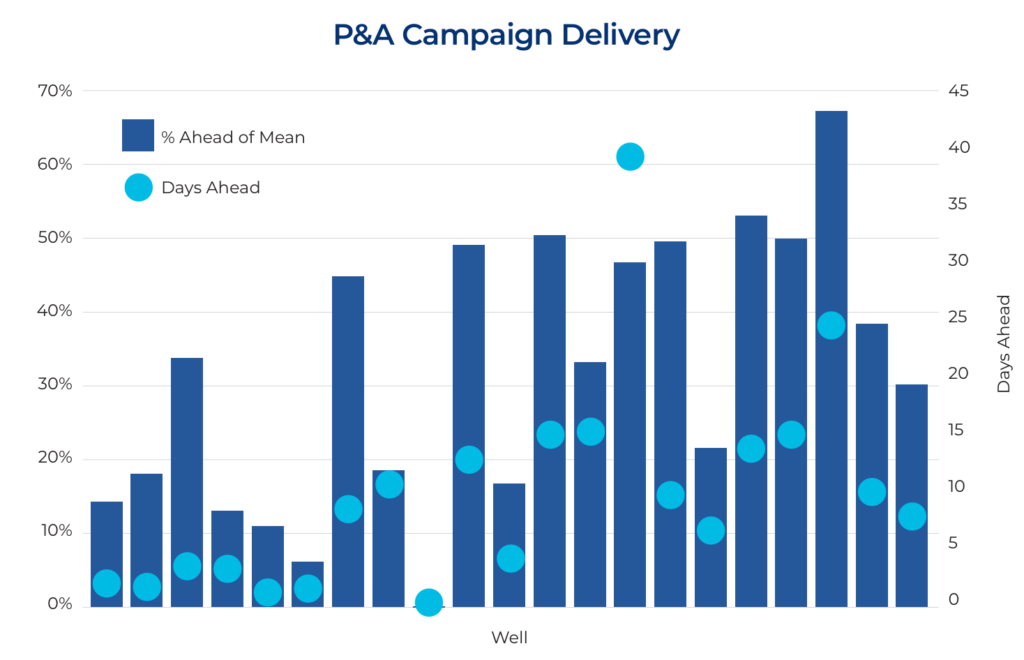
Saved $11.5M on a 40 Well P&A Campaign
40-well P&A campaign: North Sea decommissioning background
Located in the UK sector of the northern North Sea, 458 km north-north-east of Aberdeen, the decommissioning project involved the abandonment of 40 wells. The field, which started production in 1978 and ceased in 2019, was developed with a single integrated drilling, production, and accommodation platform. The decommissioning process began in 2021 and aimed to safely and efficiently plug and abandon (P&A) the wells, while minimizing environmental impact.
How H&P reduced non-productive time and operational costs on a North Sea P&A campaign
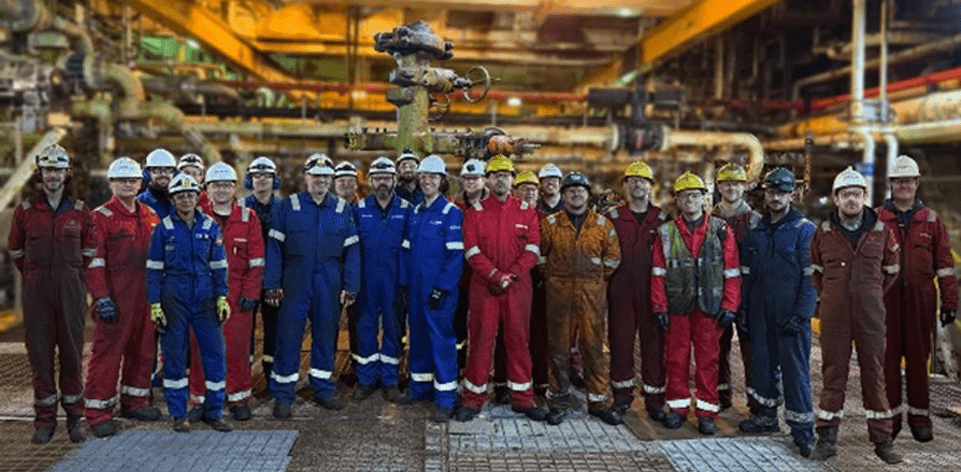
The decommissioning campaign was executed by an exceptionally experienced drilling/P&A crew. They first sought to understand the operational envelope, then implemented best practices and designed fit-for-purpose equipment that delivered clear efficiencies and cost savings. Meticulous planning for each well helped ensure preparedness for potential integrity issues. The team conducted most of the blowout preventer (BOP) and manifold pressure testing, slip and cut operations and well interventions offline. Operational times were reduced through practices such as the dual cut of the 20” casing and 26” conductor, and running risers as single sections.
The manner by which the team both onshore and the full team offshore have taken to the challenges of decommissioning these wells and overcominge daily challenges with a can do, proactive, safety focused attitude has been very heartening to see. Operations have been approached in a highly professional manner, integrated with our goals.
Decommissioning Superintendent
Equipment design and installation played a crucial role in enhancing efficiency and safety. Modifications like the V-Door A-Frame and catwalk extensions eliminated reliance on the platform’s crane, helping ensure continuous operations. A newly designed chiksan manifold enabled better practices for fluid handling, reverse circulation and cementing.
Preventive maintenance, proactive stocking of critical spares, and a robust tracking system for inspections confirmed the smooth execution of the campaign.
The integration of deck crew scopes of work into the drilling/P&A crew further optimized people on board (POB).
H&P’s unique approach to P&A
resulted in at least $290K saved per well
Results: $11.5M saved and 0.35% NPT on a 40-well abandonment campaign
The successful execution of the campaign was attributed to the team’s experience which drove a proactive approach, thorough planning and execution, along with continuous improvement efforts. The rig maintained a low non productive time (NPT) of 0.35% in 2023 and 0.96% in 2024. A remarkable achievement considering the age of the asset and the fact that some spares had already been discontinued. The operational efficiencies defined and implemented by the H&P operational team resulted in average savings of $290k per well.
Innovative strategies and technical excellence
saved $11.5M on the P&A campaign
What drove the efficiency gains: offline operations, equipment redesign, and crew integration
The decommissioning project showcased several technical and operational improvements that contributed to its success.
- One of the key strategies was the extensive use of offline activities. By conducting most of the BOP and manifolds pressure testing, and the slip and cut operations offline, the team achieved substantial cost savings. Well interventions, including punching tubing and cement operations, were also performed offline using a chiksan manifold built on the skid deck, which tied into the well bay manifold.
- The design and improvement of equipment played a vital role in enhancing efficiency and safety. The in-house drilling facilities engineering group designed, fabricated and installed equipment modifications, such as the V-Door A-Frame and catwalk extensions to manage crane limitations and help ensure continuous operations.
- The V-Door A-Frame allowed crews to lift the V-Door and skid the rig when crane limits were exceeded, while the redesigned catwalk bumper bars enabled operations to continue during high winds.
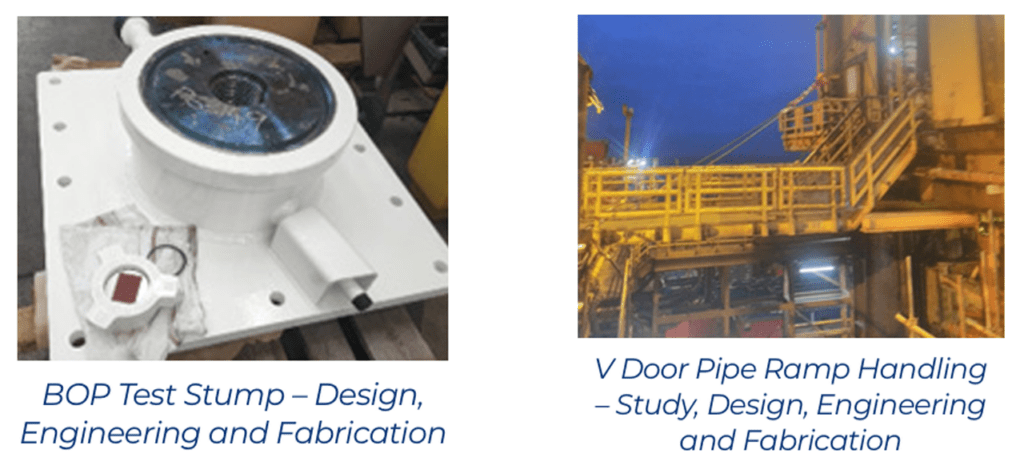
- Chiksan manifold was constructed by the team to handle contaminated fluids and gases at the surface and to enable reverse circulation and cementing.
- The reduction of operational times was another critical improvement. The team identified and implemented various operational enhancements, for instance, the dual cut of the 20” casing and 26” conductor, involving recovery, boring, cutting and layout, was completed in an average time of one hour per section.
- Another example involved making lifting plans to allow the crew to connect and torque up riser spools on the catwalk offline in horizontal position in order for the rig floor to pick up and run risers in a single section.
- Preventive maintenance was another area of focus. This approach, which included the proactive management of critical (and often discontinued) spares on very old equipment, helped ensure the smooth execution of the decommissioning campaign. The implementation of a robust tracking system for inspections and automated reminders for due dates further enhanced maintenance efficiency.
- The integration of deck crew into our scope of work reduced people on board (POB) and increased handling efficiency. The team also utilized a succession plan with promotion from within, leading to high retention levels and a motivated workforce.
It’s time to follow through on your
drilling performance potential.
Past performance is not a guarantee of future results. Any statements regarding past performance are not guarantees of future performance, and actual results may differ materially.
Download a PDF version of this case study here.